
The students
who met EVRE
first.
On 100+ Istanbul Technical University students who met EVRE before any customer did and what they changed in the product without knowing.
Before EVRE had a paying customer, it had a question: could live AI roleplay feel real enough to teach a conversation? In the spring of 2026 we sat 100+ Istanbul Technical University students down in front of the product, watched what they did, and asked them what worked. We did not run a study. We ran a series of long demos. This is what came out.
I.
Who showed up.
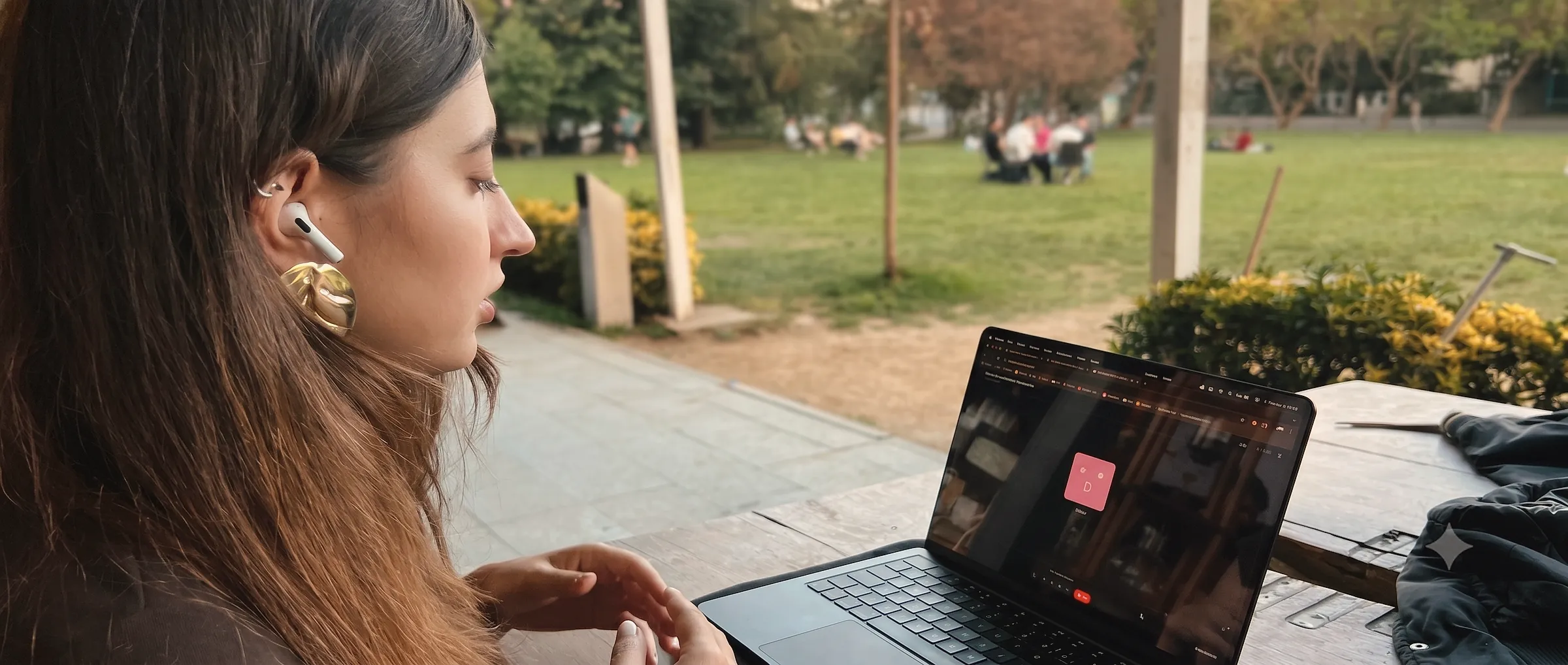
Over several weeks we ran demos for engineering students, design students, and a handful of friends who happened to study something else. Most of them were studying at Istanbul Technical University. None of them had been told what to expect. None of them were paid.
university students sat across from an AI character and held a real conversation. We watched all of them. Some of them we watched twice.
II.
What we watched for.
Five things. Nothing more. If the product failed on any of them, we would know what to fix, and we would know we weren't ready to put it in front of a customer.
- 01
Did it feel real?
Could the conversation pass for something they'd actually have to handle at work one day? Or did it sound like a chatbot pretending?
- 02
Could they speak naturally?
When they interrupted, did the AI catch it? When they paused, did it wait? When they spoke too fast, did the transcript hold?
- 03
Did the feedback help?
After the session, did they look at the score and know what to do next time? Or did the report read like a fortune cookie?
- 04
Was it useful as practice?
Did they feel like they had practiced something (like handling tension, holding their ground, defusing a tough customer) or did they feel like they had played a game?
- 05
Did it hold up?
Could a 15-minute session run from start to finish without a dropped call, an awkward silence, or a transcript that quietly broke?
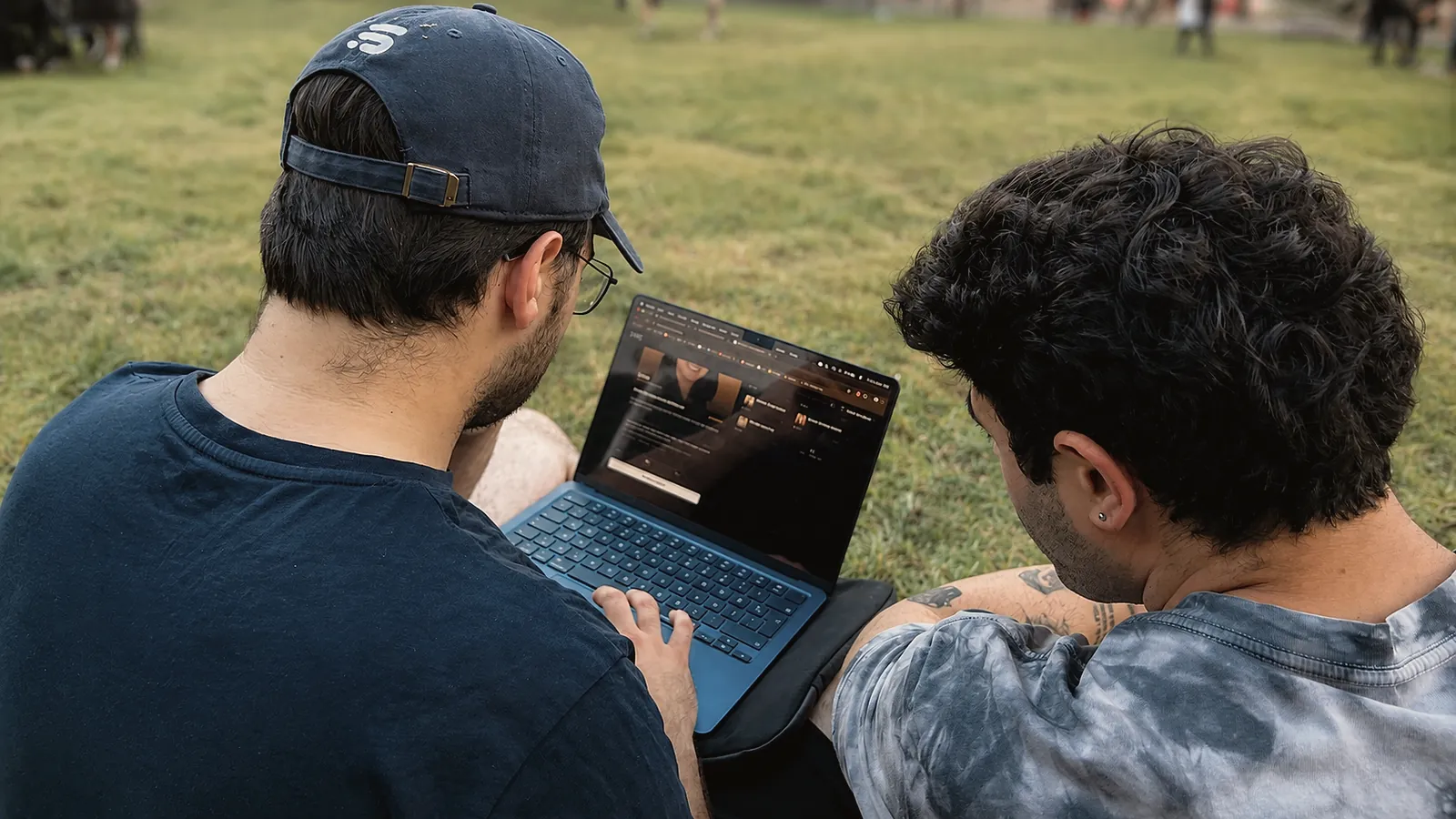
The first two minutes of every demo did more work than every sentence we'd ever written about the product.
III.
What surprised us.
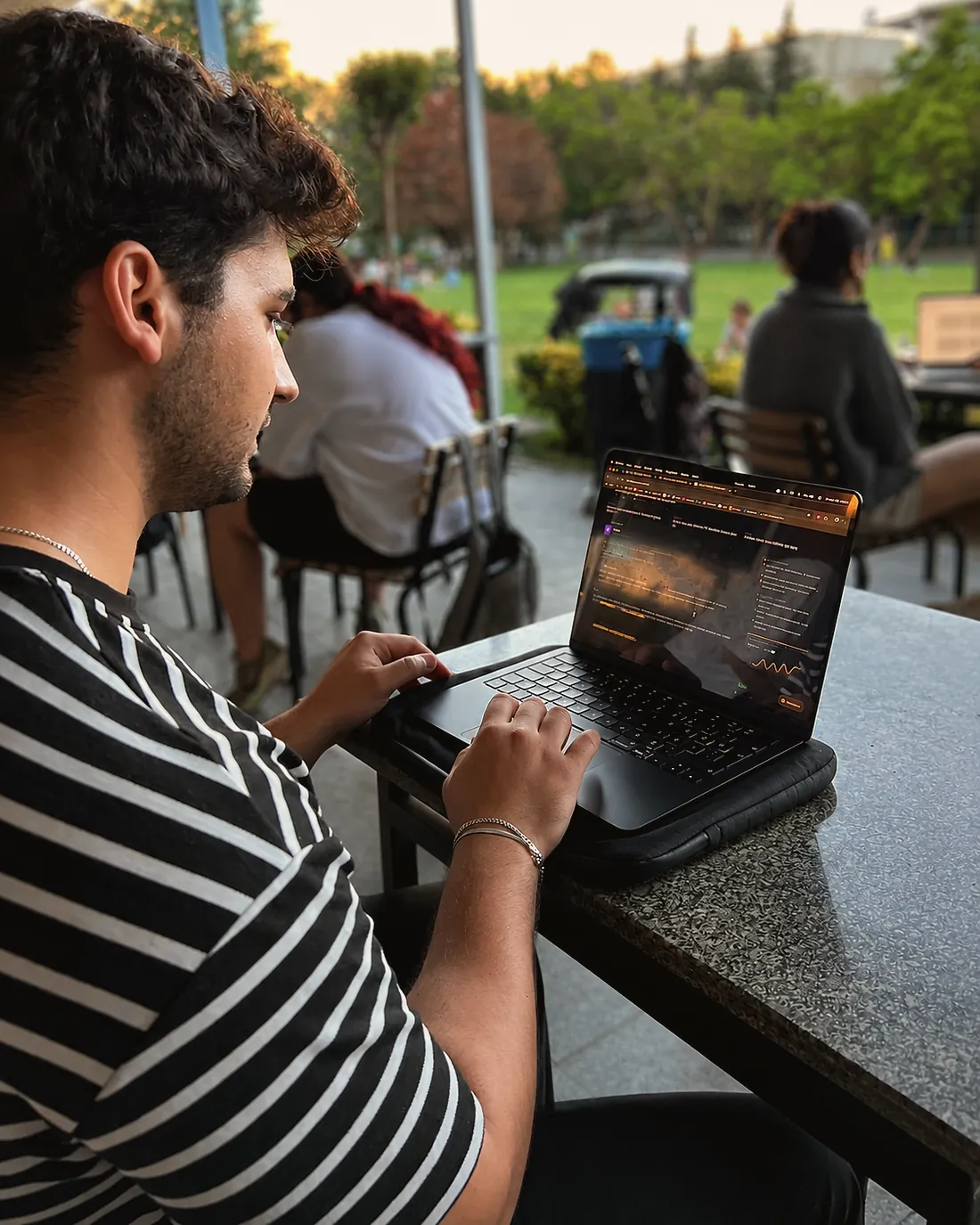
The first surprise was how quickly the product explained itself. After a single session, people understood what a live AI simulation was for in a way no landing page had managed. The pitch wasn't the pitch. The pitch was the first sixty seconds of the conversation.
The second surprise was where the strong reactions came from. People didn't react to the AI being polite. They reacted only when it pushed back, when it caught them mid-sentence and steered the conversation back, when the post-session feedback pointed at a specific moment. The realism wasn't in the voice; it was in how original the responses felt.
The third surprise was less flattering. The product had real weak spots, and they kept showing up in the same places: when someone spoke fast, during the overall flow of the simulation, when voices overlapped. We saw exactly what to fix and acted on it.
IV.
What we changed.
By the time we stopped running these sessions, five parts of the product looked different from the version the first student had seen.
Change 01
The conversations themselves.
Whenever someone hit a dead end, we revisited how the scenario flowed and reshaped it. Conversations grew more natural.
Change 02
How sessions get scored.
The scoring grew clearer and more grounded. It's still something we're refining, but the results now land where they should.
Change 03
How voice handles interruptions.
When someone cuts in, the AI now pauses, listens, and continues. That single change shifted how the sessions felt.
Change 04
How spoken words are captured.
We reworked this part so that fast speech, half-words, and mid-sentence corrections don't get lost.
Change 05
How the simulation flows.
We studied every demo to make the simulation feel more realistic and genuinely instructive, then reshaped our scenarios. The flow is more natural now.
V.
Things we don't say.
Some of the things below would make this page sound stronger. None of them would be true, so we are not saying them. We'd rather you hear the limits from us than from a competitor a year from now.
“EVRE improved student performance by some specific percentage.”
We did not measure performance with the rigor that claim would require. We took qualitative notes.
“Istanbul Technical University endorsed, partnered with, or selected EVRE.”
They did not. Students participated as individual people. Their school did not participate.
“This was a certified academic study with peer-reviewed results.”
It wasn't. It was a series of long demo sessions where we paid attention.
“The results are statistically significant.”
There was no controlled experiment, no control group, no formal sample. We watched and we listened.
What we do say is in the previous four sections. We think it earns its weight on its own.
VI.
Where we are now.
Past the student sessions, we are talking to institutional teams about real pilots: scoping calls, technical reviews, conversations about which scenarios would actually fit their work. Those are not customer deployments yet either. Until then, this is what we have, and we are not going to dress it up.
Next issue
Want to run your own?
Bring your team. We set up a scenario for your context, run a session, and share what we saw, the same way we did with the students.